2026.06.12 UP
Part1-前編【SHOWCASE UENO】#18 藤井光 / Hikaru Fujii インタビュー Interview(JP/EN)|リ・アンチー / Anqi Li
Part1-前編
【SHOWCASE UENO】
#18 藤井光 / Hikaru Fujii インタビュー Interview(JP/EN)|リ・アンチー / Anqi Li
展示情報 Exhibition Information
English follows,
インタビュー( 前編 中編 後編 )
・・・
アンチー
今回のショーケース作品の背景についてインタビューしたいと思っています。場所は芸大ですよね。藤井先生は去年の四月から芸大の先生になられたので、この場所で本を焼き、その作品を展示することについて、どう思いますか。
まずは芸大との関係から始めましょうか。
藤井
このショーケースについては、小沢さんから昨年、展示の提案を受けました。自分の制作では、展示する場所のコンテクストや歴史を考えてきました。作品は展示場所から自律しているわけではなく、じゃあ大学で展示するとはどういうことか、という問いが生まれるわけです。
制作者としては、コミッションで「何かして」と言われたら、「予算はどのくらいですか」と聞くことになります。そこから自分のできることも変わるので。今回は予算があるわけではないけれども、小沢さんがクロッキーやデッサンをくれると約束してくれたんです(笑)。
新作は難しいので、大学に関わりのある今回の作品を選びました。大学や教育に関する作品は結構あって、例えば『日本人を演じる』(2017年)。これは1903年に大阪で行われた「学術人類館」に関するもので、学術と名がついていますが、東京大学(当時は東京帝国大学)の人類学者たちが関わっていました。『解剖学教室』(2020年)はパリのボザールで撮影しています。『帝国の教育制度』(2016年)の展示では、明治期の芸大の授業の写真を使っています。このときは芸大の近現代美術史・大学史研究センターで資料を調べて複製してもらったりしていました。ただ、大学関連の作品の多くは映像なんですね。大学というコンテクストに加えて、ガラスケースの中という特殊な状況がある。「じゃあ物かな」と思い、今回展示した『なぜ、それを観るのか?』を作ったんです。
ベースには、ベルリンのオペラ広場で1933年にナチス・ドイツに賛同する大学生たちが始めた焚書運動があります。オペラ広場は象徴的な場所ですが、実はそこだけではなくて、ドイツ各地の大学で、ドイツ的ではない本を焼くことから始まった。そこに参加していた学生たちが、後にナチス体制を支えるエリートになったわけです。
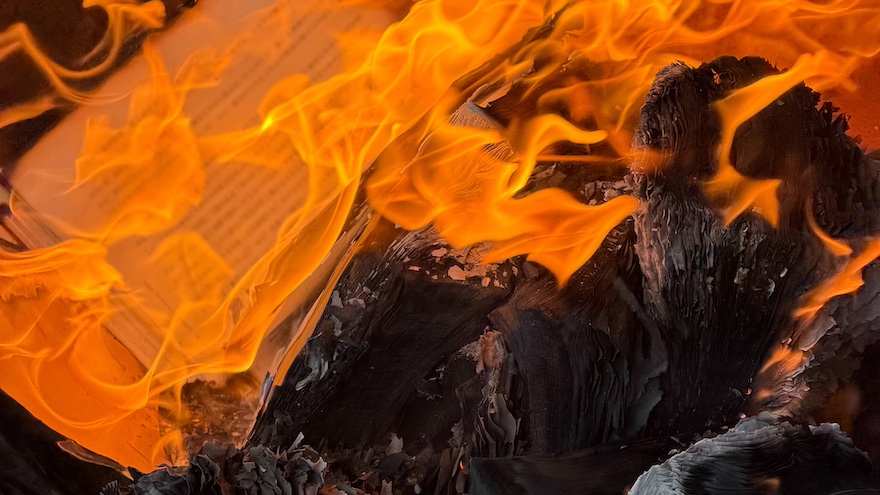
当時の焚書のアーカイブ映像を何度も見ていたら、これ翌日は結構灰が残っていたよなと思った。映像は本を焼いているシーンがインパクトがある。でも翌日の朝方には、焼け残った本とか、まだ火がくすぶっている風景が一瞬頭に浮かんで、そこから焚書に関する映像作品を作った。その撮影の時に焼け残った本を今回展示した。ドイツの大学で起きた焚書の歴史と、芸大でそれを展示することが、パチッと繋がったんです。
アンチー
芸大についてもう少し聞きたかったのは、先日、取手で本を焼いていたときに先生が「当時、先端ができたらもう海外に行かなくて済んだ」と言っていたことです。高校を卒業したときには、すでにアーティストになるつもりでしたか?
藤井
そうですね。あまりよろしくないと思うけど、大人たちが小学校の卒業作文で「夢」を書かせますよね。その時は「画家」と書いていて、中学二年生ぐらいからかなり描いていました。高校生になると完全にそっちという感じになって、大学受験も美大に行くつもりでした。でも予備校に行って、三日で「出てけ」と言われた。
アンチー
なぜ!?
藤井
予備校で絵を描くんだけど、目の前にあるものをそのまま描くというのは、不可能ではないのかと先生に問題提起したんですね。当時、高二で若かった僕は、矢内原伊作という哲学者とジャコメッティの対話による本『ジャコメッティとともに』を読んでいたんです。
アンチー
そのときから本を大事にしてたんですね。
藤井
あ、現代思想の一つのバリエーションとして読んでいた。ジャコメッティは目の前にいる人間を描くことの困難にぶつかって格闘していた。目の前にあるものを描くって、すごく難しいことなんじゃないかなと。
アンチー
なぜですか?
藤井
いわゆる先生が喜ぶ絵とかはそこそこ描けたと思うんですよ。県展やその後の全国大会でも油絵で選ばれた。ただ、そのときの美術の先生から「表彰式があるけど、俺はお前と行きたくない」と言われて、本当に仲が悪くて、先生だけが表彰式に行った(笑)。だから絵を描けないわけではないんです。
でも予備校の先生が「光と影」と言っても全然ピンとこないし、周りのデッサンを見ても何も響かない。でもジャコメッティのデッサンは今でも「いい」と思っている。
予備校で教えていたのは多分芸大の学生で、「わかった、お前ちょっとめんどくさいからキュビズムを教えてあげる」と言われて、「バカじゃないの?なんだその時代錯誤?そういうことじゃねえんだよ」な感じで言ったら、「もう来なくていい」と言われた。
まだ少子化問題もなかったから、予備校も生徒はいくらでもいたのでリジェクトされて、辞めさせられたんです。芸大行きはなくなりましたね。「もう日本は無理みたいだな」って。
アンチー
あの予備校を通して、当時の日本の美術教育が何を育てているのかが見えてきたんですよね。
藤井
そうそう、あそこで「光と影」をやっていないと入れない時代で、アートに対してあの受験ゲームは誠実じゃないと思ったんですよね。もちろん純粋にそれを信じてやっている人もいるけど、アートを志す人は大体ちょっとひねくれているから、そのゲーム性を儀礼として引き受けてうまくこなしている人もいるわけで、そういう世界に確かに嫌悪感を感じました。
アンチー
既成のルールに従って、そのルールでゲームに勝つことはつまらないと思って。
藤井
そうそう。あの時代は少しあったね。
アンチー
そしてフランスに行って、大学に入って、博士まで。
藤井
フランスでは当時、修士の後にDEA(Diplôme d’études approfondies)という研究課程があり「博士論文を書いていいですよ」という資格を得る制度があって、大体100ページくらい、日本語だと8万字から10万字くらいを書き終えて、いつでも博士課程に進める状態でした。美大に行って、その後パリ第八大学という総合大学に行ったんですよ。そこは制作というより理論ベースで、美大だけだと理論が少し物足りないと思って。
アンチー
フランスで十年過ごして、2005年に日本に戻ったんですよね。そこから二十年経って、去年芸大に来て、ルールを作る側に参加して、どうですか。教育システムと国家、政治との関係について作品を作ってきた人として、このシステムの中に入って一年経って、今はどういう感覚ですか。
藤井
確かに教育には興味がある。例えば「これ描けないじゃん」という問いはフランスに行っても続いたけど、描けないという問いは評価されるんです。一方でリジェクトする教育もあって、国や制度が違えば評価も変わる。例えば当時先端があったら、受験していたと思うんですよね。
芸大に来て内側から制度を変えるのかについては、まずは知ることかなと思います。どういう仕組みなのかまだ全然分からないなので、どう変えられるかというところまでは一年だとまだわからない。宣言は下げておきます、「変えるぞ」とか。
批評や批判は、システムを知った上で、じゃあどこを突こうかと考えられるようになるので。
アンチー
作品の制作も同じ態度ですよね、調べてから作る。DANNY JINのミュージックビデオを2024年8月16日に発表していますが、その前に調べていたんですか。
藤井
この作品のきっかけは、今度芸大で出版されるアートリサーチの本にも書きました。GAの毛利さんと清水さんの研究室が主催した展覧会「不和のアート vol.2」でDANNY JINに会って、その場で「ミュージックビデオを作らせてくれない?」と声をかけたんです。その後、二人で話し合って、そこから何をやるか考え始めました。
彼のリリックを聴いて、その詩や言葉にどう映像で応答するか。ただ「焚書」が出てきたのはすぐではなくて、最初はどこでフィルムを撮るか、ラップでよくある街中で撮るかなどを考えていました。最終的にはスタジオで撮って、本を焼くのは別で撮っています。
藤井
ビデオクリップの制作費は全部自費なんで、せこいけど、焚書のシーンの映像やそこで残る本たちは次の展示に転換できるかなとは考えていました。
焼いた本は自分が読んできた本と、友人たちに声をかけて集めた段ボール80箱分で、さらに焼くための本を国内外の古本屋で新たに購入しました。そのうち、今回展示しているエドワード・サイードの『パレスチナとは何か』という本には、ジャン・モアが撮ったパレスチナの写真が載っている。サイードは国連でジャン・モアの写真と一緒に自身のテキストを展示しようとしたんですね。それが国連で検閲に遭って、サイードの文章だけ全部消された。
サイードがこの本を制作する背景には、イギリスの美術史家ジョン・バージャーが書いた『第七の男』があって、このときタッグを組んでいたのがジャン・モアでした。バージャーの本を読んでサイードがジャン・モアと『パレスチナとは何か』を書いた。この二冊は、そうやって繋がっている。
今回の展示では、当時出版された本をわざわざ買って焼いています。でも焼いた本の中にはその他にも貴重なものが入っていて、人種差別や植民地主義についての本たちで、なぜ自分自身やこの社会がパレスチナの人たちの現状を忘却していたのかを問いたかった。これだけの本がずっと語っていたじゃないかと。
ただ80箱を一気に焼くので火力が強くてすぐ焼けちゃうんですよ。例えばブラックパンサーの運動のちょっと薄めの本をヒュッと入れて、ちゃんと撮影しようとしたら一瞬でなくなってしまった。取り出すこともできずに。そういうのばかりでしたね。
アンチー
本を書くには何ヶ月も、何年もかかるのに、焼くのは一瞬ですね。
本を焼くという発想にはどうやって至ったのですか?
藤井
自分は20世紀に積み上げられた知の流れの中にいることを感じた世代なんですよ。例えば自分の息子は今のアニメも見るしエヴァンゲリオン(1995年)も知っているけど、時間軸がリニアな積み上げではなく、もっとノンリニアな感じでしょ。
それに対して、「アウシュビッツ以降に詩を書けるか」とか、アーレントの全体主義批判から、その後の構造主義や脱構築とか、フランスにいた時はまだデリダも生きていたし、自分はそういう批評的思索の連続性の中にいたのかなと思っていて。そういう積み上げられてきた知が、パレスチナ・イスラエルの問題やトランプの参入によって、全部壊れていく実感があるわけ。
最初に話したナチの焚書のような知を破壊する現代に対して、じゃあ、あえて自分で焼こうかなと。
アンチー
その知の壊される過程を見せる?
藤井
そうですね。やっぱり本が焼けた情景と、パレスチナが破壊されていく状態が、すごく僕の中で繋がってる。
インタビュー 中編 へ続く
・・・・
Anqi Li: I’d like to interview you about the context of Why Look at It? (2025). The venue is Geidai (Tokyo University of the Arts). Since you became a professor here last April, I want to ask what it means to make a work involving book burning in this particular place.
Maybe we can start with your relationship to Geidai.
Hikaru Fujii: Ozawa approached me last year about the Showcase. In my own practice, I’ve always paid attention to the context and history of the exhibition site. A work doesn’t exist independently of its site, so the question becomes: what does it mean to exhibit inside a university?
As an artist, when I receive a commission like, “Please do something,” the first thing I ask is, “What’s the budget?” The answer affects what I can make. This time there wasn’t really a budget, but Ozawa promised to give me some croquis or drawings. (laughs)
Making a new work would have been difficult, so I chose this piece because it relates to universities. I’ve made quite a few works about universities and education. Playing Japanese (2017), for example, deals with the “Academic Human Pavilion” held in Osaka in 1903. It had the word “academic” in its title, and anthropologists from the University of Tokyo, then Tokyo Imperial University, were involved. The Anatomy Classroom (2020) was filmed at the École des Beaux-Arts in Paris. For The Educational System of an Empire (2016), I used photographs of Geidai classes from the Meiji period. At the time, I researched materials at GEIDAI Archives Center of Modern Art and had them reproduced. Most of my university-related works, however, are videos. This time, besides the university context, there was also the specific condition of the glass display case. So I thought, maybe it should be object-based. That led me to the work shown here, Why Look at It?
The work is based on the book-burning campaign that began in 1933 at Opernplatz in Berlin, initiated by university students who supported Nazi Germany. Opernplatz is a symbolic site, but the burnings were not limited to that square. They took place at universities across Germany, where books deemed “un-German” were burned. The students who participated in those burnings later became part of the elite backbone of the Nazi regime.
I kept watching archival footage of those book burnings, and at some point I thought, there must have been a lot of ash left the next day. The footage focuses on the dramatic moment of the books burning. But I began to see the following morning: partially burned books, fires still smoldering. That image led me to make a video work about book burning. The books shown here are from that shoot. The history of book burning at German universities and the act of showing it at Geidai suddenly connected.
AL: I wanted to ask a little more about Geidai because the other day, when we were burning books in Toride, you said, “If the Department of Intermedia Art at Geidai had existed back then, I wouldn’t have had to go abroad.” When you graduated from high school, were you already planning to become an artist?
HF: Yes. I don’t think it’s nice, but adults make children write about their “dreams” in elementary school graduation essays. I wrote “painter.” From the second year of middle school, I was drawing quite seriously. By high school, I was completely set on that path, and I planned to apply to art schools. I went to a prep school, and they told me to “get out” within 3 days.
AL: How come?!
HF: We were drawing at the prep school, but I raised a question. I asked the teacher whether it was even possible to draw something exactly as it appears in front of you. I was a second-year high school student then, and I had been reading With Giacometti, a book based on conversations between the philosopher Isaku Yanaihara and Giacometti.
AL: So books were already important to you then.
HF: I was reading it as one strand of contemporary thought. Giacometti was struggling with the difficulty of drawing the person standing in front of him. I felt that drawing what is right in front of you must actually be an incredibly difficult thing.
AL: Why is that?
HF: I could draw what the teachers liked well enough. My oil paintings were selected for the prefectural exhibition and later for the national one. But the art teacher at my school said, “There’s an award ceremony, but I don’t want to go with you.” We really didn’t get along, so only he went to the ceremony. (laughs) So it wasn’t that I couldn’t do it.
But when the prep school teacher talked about “light and shadow,” it meant nothing to me. The drawings there didn’t resonate with me at all. Giacometti’s drawings, though, still hit me in the right place, even today.
The person teaching at the prep school was probably a Geidai student. He said, “Fine, so annoying. I’ll teach you Cubism.” I responded with something like, “Are you out of your mind? What kind of anachronism is that? That’s not the problem.” Then he said, “Don’t bother coming back.”
This was before the declining birthrate became an issue, so prep schools had plenty of students. They could reject me easily, and I was forced to quit. That ended my path to Geidai. I thought, “Japan isn’t going to work for me.”
AL: Through that prep school, you saw what Japanese art education was producing at the time.
HF: Exactly. Back then, unless you played the “light and shadow” game, you couldn’t get in. I felt that the entrance-exam system was dishonest toward art. Of course, some people truly believed in it and worked that way. But people who are drawn to art are usually a bit contrarian, so some accepted the game as a ritual and learned to play it well. I did feel disgust toward that world.
AL: You found it boring to follow established rules and win the game that way.
HF: Yes, somewhat, at the time.
AL: Then you went to France, entered university, and continued all the way to the doctoral level.
HF: In France at the time, after the master’s degree, there was a research program called the DEA, Diplôme d’études approfondies. It gave you the qualification to write a doctoral dissertation. I had written about one hundred pages, around 80,000 to 100,000 Japanese characters, and I was ready to move into the doctoral program at any time.
I went to art school first, and then to Paris 8, a comprehensive university. Paris 8 was more theory-based than practice-based since I felt that art school alone didn’t give me enough theory.
AL: After ten years in France, you returned to Japan in 2005. Last year, twenty years after coming back, you came to Geidai and joined the side that makes the rules. How has that been? As someone who has made work about education systems, the nation-state, and politics, how do you feel after a year inside the system?
HF: I am definitely interested in education. The question “Isn’t this impossible to draw?” stayed with me even after arriving in France, but in France that kind of question was appreciated. Then there was also the education system that rejected such questions. Depending on the country or institution, the same thing can be evaluated completely differently. If Intermedia Art had existed back then, I think I would have applied.
As for whether I came to Geidai to change the institution from the inside, I feel that the first step is to understand it. I still don’t understand how the system works, so after one year I’m not yet at the point where I can say how it could be changed. I’m holding back from making declarations like, “I’m going to change it.”
Critique or criticism becomes possible after you understand the system. Only then can you think about where to intervene.
AL: That is the same attitude you take in making work: you research first, then create. DANNY JIN’s music video was released on August 16, 2024. Had you been researching before that?
HF: I wrote about that process in a book on art research that will be published by Geidai soon. I met DANNY JIN at The Arts of Dissent: Art and Democracy vol. 2, an exhibition organized by Mōri and Shimizu’s labs at GA. Right there, I asked him, “May I make a music video for you?” After that, the two of us talked it through, and I started thinking about what it could be.
I listened to his lyrics and thought about how to respond to his poetry and words through video. But the idea of “book burning” didn’t come right away. At first, I was thinking about where to shoot on film, whether to film in the streets like in many rap videos. In the end, we shot in the studio and filmed the book burning separately.
HF: I paid for the music video production out of pocket, a little petty but I was thinking that the book-burning footage and the remaining books could be used for another exhibition.
The books I burned included books I had read, books collected from friends, eighty boxes in total, and additional books I bought from secondhand bookstores in Japan and abroad specifically to burn. Among them was Edward Said’s The Question of Palestine, which is included in this exhibition. The book contains photographs of Palestine by Jean Mohr. Said tried to exhibit his own text alongside Mohr’s photographs at the United Nations, but the exhibition was censored, and all of Said’s writing was removed.
Behind Said’s book is A Seventh Man by the British art critic John Berger, who had also worked with Jean Mohr. Said read Berger’s book and then made The Question of Palestine with Mohr. The two books are connected in that way.
For this exhibition, I went out of my way to buy copies published back then and burned them. But there was something else valuable in the books I burned: they were books on racism and colonialism, and I wanted to ask why I myself, and this society, had forgotten the living condition of Palestinians, when so many books had been telling us about it all along.
But when you burn eighty boxes at once, the fire is so strong that the books burn immediately. For example, I threw in a fairly thin book on the Black Panther movement, thinking we would film it properly, and it disappeared in an instant. We couldn’t even get it out. That happened again and again.
AL: It takes months, even years, to write a book, but only an instant to burn it.
How did you arrive at the idea of burning books?
HF: I belong to a generation that felt itself part of the lineage of thought built up over the twentieth century. My son, for example, watches anime being made today and knows Evangelion (1995) too. Instead of linear accumulation, his timeline is more nonlinear.
For me, there was the question of whether it is possible to write poetry after Auschwitz, Arendt’s critique of totalitarianism, and then constructionism and deconstructionism. When I was in France, Derrida was still alive. I think I was inside that continuity of critical thought. And now I have the sense that this accumulated body of thought is being destroyed by the Palestine-Israel situation and by Trump’s entry.
In response to this present, where such thought is being destroyed in ways that recall the Nazi book burnings I mentioned earlier, I thought: then I might as well burn the books myself.
AL: To show that process of destruction?
HF: Yes. In my mind, the image of books burning and the destruction of Palestine are strongly connected.
Click to Part2 of the Interview
【SHOWCASE UENO】
#18 藤井光 / Hikaru Fujii インタビュー Interview(JP/EN)|リ・アンチー / Anqi Li
展示情報 Exhibition Information
English follows,
インタビュー( 前編 中編 後編 )
・・・
1、予備校に行って、三日で「出てけ」と言われ
アンチー
今回のショーケース作品の背景についてインタビューしたいと思っています。場所は芸大ですよね。藤井先生は去年の四月から芸大の先生になられたので、この場所で本を焼き、その作品を展示することについて、どう思いますか。
まずは芸大との関係から始めましょうか。
藤井
このショーケースについては、小沢さんから昨年、展示の提案を受けました。自分の制作では、展示する場所のコンテクストや歴史を考えてきました。作品は展示場所から自律しているわけではなく、じゃあ大学で展示するとはどういうことか、という問いが生まれるわけです。
制作者としては、コミッションで「何かして」と言われたら、「予算はどのくらいですか」と聞くことになります。そこから自分のできることも変わるので。今回は予算があるわけではないけれども、小沢さんがクロッキーやデッサンをくれると約束してくれたんです(笑)。
新作は難しいので、大学に関わりのある今回の作品を選びました。大学や教育に関する作品は結構あって、例えば『日本人を演じる』(2017年)。これは1903年に大阪で行われた「学術人類館」に関するもので、学術と名がついていますが、東京大学(当時は東京帝国大学)の人類学者たちが関わっていました。『解剖学教室』(2020年)はパリのボザールで撮影しています。『帝国の教育制度』(2016年)の展示では、明治期の芸大の授業の写真を使っています。このときは芸大の近現代美術史・大学史研究センターで資料を調べて複製してもらったりしていました。ただ、大学関連の作品の多くは映像なんですね。大学というコンテクストに加えて、ガラスケースの中という特殊な状況がある。「じゃあ物かな」と思い、今回展示した『なぜ、それを観るのか?』を作ったんです。
ベースには、ベルリンのオペラ広場で1933年にナチス・ドイツに賛同する大学生たちが始めた焚書運動があります。オペラ広場は象徴的な場所ですが、実はそこだけではなくて、ドイツ各地の大学で、ドイツ的ではない本を焼くことから始まった。そこに参加していた学生たちが、後にナチス体制を支えるエリートになったわけです。
当時の焚書のアーカイブ映像を何度も見ていたら、これ翌日は結構灰が残っていたよなと思った。映像は本を焼いているシーンがインパクトがある。でも翌日の朝方には、焼け残った本とか、まだ火がくすぶっている風景が一瞬頭に浮かんで、そこから焚書に関する映像作品を作った。その撮影の時に焼け残った本を今回展示した。ドイツの大学で起きた焚書の歴史と、芸大でそれを展示することが、パチッと繋がったんです。
アンチー
芸大についてもう少し聞きたかったのは、先日、取手で本を焼いていたときに先生が「当時、先端ができたらもう海外に行かなくて済んだ」と言っていたことです。高校を卒業したときには、すでにアーティストになるつもりでしたか?
藤井
そうですね。あまりよろしくないと思うけど、大人たちが小学校の卒業作文で「夢」を書かせますよね。その時は「画家」と書いていて、中学二年生ぐらいからかなり描いていました。高校生になると完全にそっちという感じになって、大学受験も美大に行くつもりでした。でも予備校に行って、三日で「出てけ」と言われた。
アンチー
なぜ!?
藤井
予備校で絵を描くんだけど、目の前にあるものをそのまま描くというのは、不可能ではないのかと先生に問題提起したんですね。当時、高二で若かった僕は、矢内原伊作という哲学者とジャコメッティの対話による本『ジャコメッティとともに』を読んでいたんです。
アンチー
そのときから本を大事にしてたんですね。
藤井
あ、現代思想の一つのバリエーションとして読んでいた。ジャコメッティは目の前にいる人間を描くことの困難にぶつかって格闘していた。目の前にあるものを描くって、すごく難しいことなんじゃないかなと。
アンチー
なぜですか?
藤井
いわゆる先生が喜ぶ絵とかはそこそこ描けたと思うんですよ。県展やその後の全国大会でも油絵で選ばれた。ただ、そのときの美術の先生から「表彰式があるけど、俺はお前と行きたくない」と言われて、本当に仲が悪くて、先生だけが表彰式に行った(笑)。だから絵を描けないわけではないんです。
でも予備校の先生が「光と影」と言っても全然ピンとこないし、周りのデッサンを見ても何も響かない。でもジャコメッティのデッサンは今でも「いい」と思っている。
予備校で教えていたのは多分芸大の学生で、「わかった、お前ちょっとめんどくさいからキュビズムを教えてあげる」と言われて、「バカじゃないの?なんだその時代錯誤?そういうことじゃねえんだよ」な感じで言ったら、「もう来なくていい」と言われた。
まだ少子化問題もなかったから、予備校も生徒はいくらでもいたのでリジェクトされて、辞めさせられたんです。芸大行きはなくなりましたね。「もう日本は無理みたいだな」って。
アンチー
あの予備校を通して、当時の日本の美術教育が何を育てているのかが見えてきたんですよね。
藤井
そうそう、あそこで「光と影」をやっていないと入れない時代で、アートに対してあの受験ゲームは誠実じゃないと思ったんですよね。もちろん純粋にそれを信じてやっている人もいるけど、アートを志す人は大体ちょっとひねくれているから、そのゲーム性を儀礼として引き受けてうまくこなしている人もいるわけで、そういう世界に確かに嫌悪感を感じました。
アンチー
既成のルールに従って、そのルールでゲームに勝つことはつまらないと思って。
藤井
そうそう。あの時代は少しあったね。
アンチー
そしてフランスに行って、大学に入って、博士まで。
藤井
フランスでは当時、修士の後にDEA(Diplôme d’études approfondies)という研究課程があり「博士論文を書いていいですよ」という資格を得る制度があって、大体100ページくらい、日本語だと8万字から10万字くらいを書き終えて、いつでも博士課程に進める状態でした。美大に行って、その後パリ第八大学という総合大学に行ったんですよ。そこは制作というより理論ベースで、美大だけだと理論が少し物足りないと思って。
アンチー
フランスで十年過ごして、2005年に日本に戻ったんですよね。そこから二十年経って、去年芸大に来て、ルールを作る側に参加して、どうですか。教育システムと国家、政治との関係について作品を作ってきた人として、このシステムの中に入って一年経って、今はどういう感覚ですか。
藤井
確かに教育には興味がある。例えば「これ描けないじゃん」という問いはフランスに行っても続いたけど、描けないという問いは評価されるんです。一方でリジェクトする教育もあって、国や制度が違えば評価も変わる。例えば当時先端があったら、受験していたと思うんですよね。
芸大に来て内側から制度を変えるのかについては、まずは知ることかなと思います。どういう仕組みなのかまだ全然分からないなので、どう変えられるかというところまでは一年だとまだわからない。宣言は下げておきます、「変えるぞ」とか。
批評や批判は、システムを知った上で、じゃあどこを突こうかと考えられるようになるので。
アンチー
作品の制作も同じ態度ですよね、調べてから作る。DANNY JINのミュージックビデオを2024年8月16日に発表していますが、その前に調べていたんですか。
藤井
この作品のきっかけは、今度芸大で出版されるアートリサーチの本にも書きました。GAの毛利さんと清水さんの研究室が主催した展覧会「不和のアート vol.2」でDANNY JINに会って、その場で「ミュージックビデオを作らせてくれない?」と声をかけたんです。その後、二人で話し合って、そこから何をやるか考え始めました。
彼のリリックを聴いて、その詩や言葉にどう映像で応答するか。ただ「焚書」が出てきたのはすぐではなくて、最初はどこでフィルムを撮るか、ラップでよくある街中で撮るかなどを考えていました。最終的にはスタジオで撮って、本を焼くのは別で撮っています。
2、段ボールで80箱分の本を焼いた
藤井
ビデオクリップの制作費は全部自費なんで、せこいけど、焚書のシーンの映像やそこで残る本たちは次の展示に転換できるかなとは考えていました。
焼いた本は自分が読んできた本と、友人たちに声をかけて集めた段ボール80箱分で、さらに焼くための本を国内外の古本屋で新たに購入しました。そのうち、今回展示しているエドワード・サイードの『パレスチナとは何か』という本には、ジャン・モアが撮ったパレスチナの写真が載っている。サイードは国連でジャン・モアの写真と一緒に自身のテキストを展示しようとしたんですね。それが国連で検閲に遭って、サイードの文章だけ全部消された。
サイードがこの本を制作する背景には、イギリスの美術史家ジョン・バージャーが書いた『第七の男』があって、このときタッグを組んでいたのがジャン・モアでした。バージャーの本を読んでサイードがジャン・モアと『パレスチナとは何か』を書いた。この二冊は、そうやって繋がっている。
今回の展示では、当時出版された本をわざわざ買って焼いています。でも焼いた本の中にはその他にも貴重なものが入っていて、人種差別や植民地主義についての本たちで、なぜ自分自身やこの社会がパレスチナの人たちの現状を忘却していたのかを問いたかった。これだけの本がずっと語っていたじゃないかと。
ただ80箱を一気に焼くので火力が強くてすぐ焼けちゃうんですよ。例えばブラックパンサーの運動のちょっと薄めの本をヒュッと入れて、ちゃんと撮影しようとしたら一瞬でなくなってしまった。取り出すこともできずに。そういうのばかりでしたね。
アンチー
本を書くには何ヶ月も、何年もかかるのに、焼くのは一瞬ですね。
本を焼くという発想にはどうやって至ったのですか?
藤井
自分は20世紀に積み上げられた知の流れの中にいることを感じた世代なんですよ。例えば自分の息子は今のアニメも見るしエヴァンゲリオン(1995年)も知っているけど、時間軸がリニアな積み上げではなく、もっとノンリニアな感じでしょ。
それに対して、「アウシュビッツ以降に詩を書けるか」とか、アーレントの全体主義批判から、その後の構造主義や脱構築とか、フランスにいた時はまだデリダも生きていたし、自分はそういう批評的思索の連続性の中にいたのかなと思っていて。そういう積み上げられてきた知が、パレスチナ・イスラエルの問題やトランプの参入によって、全部壊れていく実感があるわけ。
最初に話したナチの焚書のような知を破壊する現代に対して、じゃあ、あえて自分で焼こうかなと。
アンチー
その知の壊される過程を見せる?
藤井
そうですね。やっぱり本が焼けた情景と、パレスチナが破壊されていく状態が、すごく僕の中で繋がってる。
インタビュー 中編 へ続く
・・・・
1. Prep school told me to “get out” within 3 days
Anqi Li: I’d like to interview you about the context of Why Look at It? (2025). The venue is Geidai (Tokyo University of the Arts). Since you became a professor here last April, I want to ask what it means to make a work involving book burning in this particular place.
Maybe we can start with your relationship to Geidai.
Hikaru Fujii: Ozawa approached me last year about the Showcase. In my own practice, I’ve always paid attention to the context and history of the exhibition site. A work doesn’t exist independently of its site, so the question becomes: what does it mean to exhibit inside a university?
As an artist, when I receive a commission like, “Please do something,” the first thing I ask is, “What’s the budget?” The answer affects what I can make. This time there wasn’t really a budget, but Ozawa promised to give me some croquis or drawings. (laughs)
Making a new work would have been difficult, so I chose this piece because it relates to universities. I’ve made quite a few works about universities and education. Playing Japanese (2017), for example, deals with the “Academic Human Pavilion” held in Osaka in 1903. It had the word “academic” in its title, and anthropologists from the University of Tokyo, then Tokyo Imperial University, were involved. The Anatomy Classroom (2020) was filmed at the École des Beaux-Arts in Paris. For The Educational System of an Empire (2016), I used photographs of Geidai classes from the Meiji period. At the time, I researched materials at GEIDAI Archives Center of Modern Art and had them reproduced. Most of my university-related works, however, are videos. This time, besides the university context, there was also the specific condition of the glass display case. So I thought, maybe it should be object-based. That led me to the work shown here, Why Look at It?
The work is based on the book-burning campaign that began in 1933 at Opernplatz in Berlin, initiated by university students who supported Nazi Germany. Opernplatz is a symbolic site, but the burnings were not limited to that square. They took place at universities across Germany, where books deemed “un-German” were burned. The students who participated in those burnings later became part of the elite backbone of the Nazi regime.
I kept watching archival footage of those book burnings, and at some point I thought, there must have been a lot of ash left the next day. The footage focuses on the dramatic moment of the books burning. But I began to see the following morning: partially burned books, fires still smoldering. That image led me to make a video work about book burning. The books shown here are from that shoot. The history of book burning at German universities and the act of showing it at Geidai suddenly connected.
AL: I wanted to ask a little more about Geidai because the other day, when we were burning books in Toride, you said, “If the Department of Intermedia Art at Geidai had existed back then, I wouldn’t have had to go abroad.” When you graduated from high school, were you already planning to become an artist?
HF: Yes. I don’t think it’s nice, but adults make children write about their “dreams” in elementary school graduation essays. I wrote “painter.” From the second year of middle school, I was drawing quite seriously. By high school, I was completely set on that path, and I planned to apply to art schools. I went to a prep school, and they told me to “get out” within 3 days.
AL: How come?!
HF: We were drawing at the prep school, but I raised a question. I asked the teacher whether it was even possible to draw something exactly as it appears in front of you. I was a second-year high school student then, and I had been reading With Giacometti, a book based on conversations between the philosopher Isaku Yanaihara and Giacometti.
AL: So books were already important to you then.
HF: I was reading it as one strand of contemporary thought. Giacometti was struggling with the difficulty of drawing the person standing in front of him. I felt that drawing what is right in front of you must actually be an incredibly difficult thing.
AL: Why is that?
HF: I could draw what the teachers liked well enough. My oil paintings were selected for the prefectural exhibition and later for the national one. But the art teacher at my school said, “There’s an award ceremony, but I don’t want to go with you.” We really didn’t get along, so only he went to the ceremony. (laughs) So it wasn’t that I couldn’t do it.
But when the prep school teacher talked about “light and shadow,” it meant nothing to me. The drawings there didn’t resonate with me at all. Giacometti’s drawings, though, still hit me in the right place, even today.
The person teaching at the prep school was probably a Geidai student. He said, “Fine, so annoying. I’ll teach you Cubism.” I responded with something like, “Are you out of your mind? What kind of anachronism is that? That’s not the problem.” Then he said, “Don’t bother coming back.”
This was before the declining birthrate became an issue, so prep schools had plenty of students. They could reject me easily, and I was forced to quit. That ended my path to Geidai. I thought, “Japan isn’t going to work for me.”
AL: Through that prep school, you saw what Japanese art education was producing at the time.
HF: Exactly. Back then, unless you played the “light and shadow” game, you couldn’t get in. I felt that the entrance-exam system was dishonest toward art. Of course, some people truly believed in it and worked that way. But people who are drawn to art are usually a bit contrarian, so some accepted the game as a ritual and learned to play it well. I did feel disgust toward that world.
AL: You found it boring to follow established rules and win the game that way.
HF: Yes, somewhat, at the time.
AL: Then you went to France, entered university, and continued all the way to the doctoral level.
HF: In France at the time, after the master’s degree, there was a research program called the DEA, Diplôme d’études approfondies. It gave you the qualification to write a doctoral dissertation. I had written about one hundred pages, around 80,000 to 100,000 Japanese characters, and I was ready to move into the doctoral program at any time.
I went to art school first, and then to Paris 8, a comprehensive university. Paris 8 was more theory-based than practice-based since I felt that art school alone didn’t give me enough theory.
AL: After ten years in France, you returned to Japan in 2005. Last year, twenty years after coming back, you came to Geidai and joined the side that makes the rules. How has that been? As someone who has made work about education systems, the nation-state, and politics, how do you feel after a year inside the system?
HF: I am definitely interested in education. The question “Isn’t this impossible to draw?” stayed with me even after arriving in France, but in France that kind of question was appreciated. Then there was also the education system that rejected such questions. Depending on the country or institution, the same thing can be evaluated completely differently. If Intermedia Art had existed back then, I think I would have applied.
As for whether I came to Geidai to change the institution from the inside, I feel that the first step is to understand it. I still don’t understand how the system works, so after one year I’m not yet at the point where I can say how it could be changed. I’m holding back from making declarations like, “I’m going to change it.”
Critique or criticism becomes possible after you understand the system. Only then can you think about where to intervene.
AL: That is the same attitude you take in making work: you research first, then create. DANNY JIN’s music video was released on August 16, 2024. Had you been researching before that?
HF: I wrote about that process in a book on art research that will be published by Geidai soon. I met DANNY JIN at The Arts of Dissent: Art and Democracy vol. 2, an exhibition organized by Mōri and Shimizu’s labs at GA. Right there, I asked him, “May I make a music video for you?” After that, the two of us talked it through, and I started thinking about what it could be.
I listened to his lyrics and thought about how to respond to his poetry and words through video. But the idea of “book burning” didn’t come right away. At first, I was thinking about where to shoot on film, whether to film in the streets like in many rap videos. In the end, we shot in the studio and filmed the book burning separately.
2. I burned 80 boxes of books
HF: I paid for the music video production out of pocket, a little petty but I was thinking that the book-burning footage and the remaining books could be used for another exhibition.
The books I burned included books I had read, books collected from friends, eighty boxes in total, and additional books I bought from secondhand bookstores in Japan and abroad specifically to burn. Among them was Edward Said’s The Question of Palestine, which is included in this exhibition. The book contains photographs of Palestine by Jean Mohr. Said tried to exhibit his own text alongside Mohr’s photographs at the United Nations, but the exhibition was censored, and all of Said’s writing was removed.
Behind Said’s book is A Seventh Man by the British art critic John Berger, who had also worked with Jean Mohr. Said read Berger’s book and then made The Question of Palestine with Mohr. The two books are connected in that way.
For this exhibition, I went out of my way to buy copies published back then and burned them. But there was something else valuable in the books I burned: they were books on racism and colonialism, and I wanted to ask why I myself, and this society, had forgotten the living condition of Palestinians, when so many books had been telling us about it all along.
But when you burn eighty boxes at once, the fire is so strong that the books burn immediately. For example, I threw in a fairly thin book on the Black Panther movement, thinking we would film it properly, and it disappeared in an instant. We couldn’t even get it out. That happened again and again.
AL: It takes months, even years, to write a book, but only an instant to burn it.
How did you arrive at the idea of burning books?
HF: I belong to a generation that felt itself part of the lineage of thought built up over the twentieth century. My son, for example, watches anime being made today and knows Evangelion (1995) too. Instead of linear accumulation, his timeline is more nonlinear.
For me, there was the question of whether it is possible to write poetry after Auschwitz, Arendt’s critique of totalitarianism, and then constructionism and deconstructionism. When I was in France, Derrida was still alive. I think I was inside that continuity of critical thought. And now I have the sense that this accumulated body of thought is being destroyed by the Palestine-Israel situation and by Trump’s entry.
In response to this present, where such thought is being destroyed in ways that recall the Nazi book burnings I mentioned earlier, I thought: then I might as well burn the books myself.
AL: To show that process of destruction?
HF: Yes. In my mind, the image of books burning and the destruction of Palestine are strongly connected.
Click to Part2 of the Interview